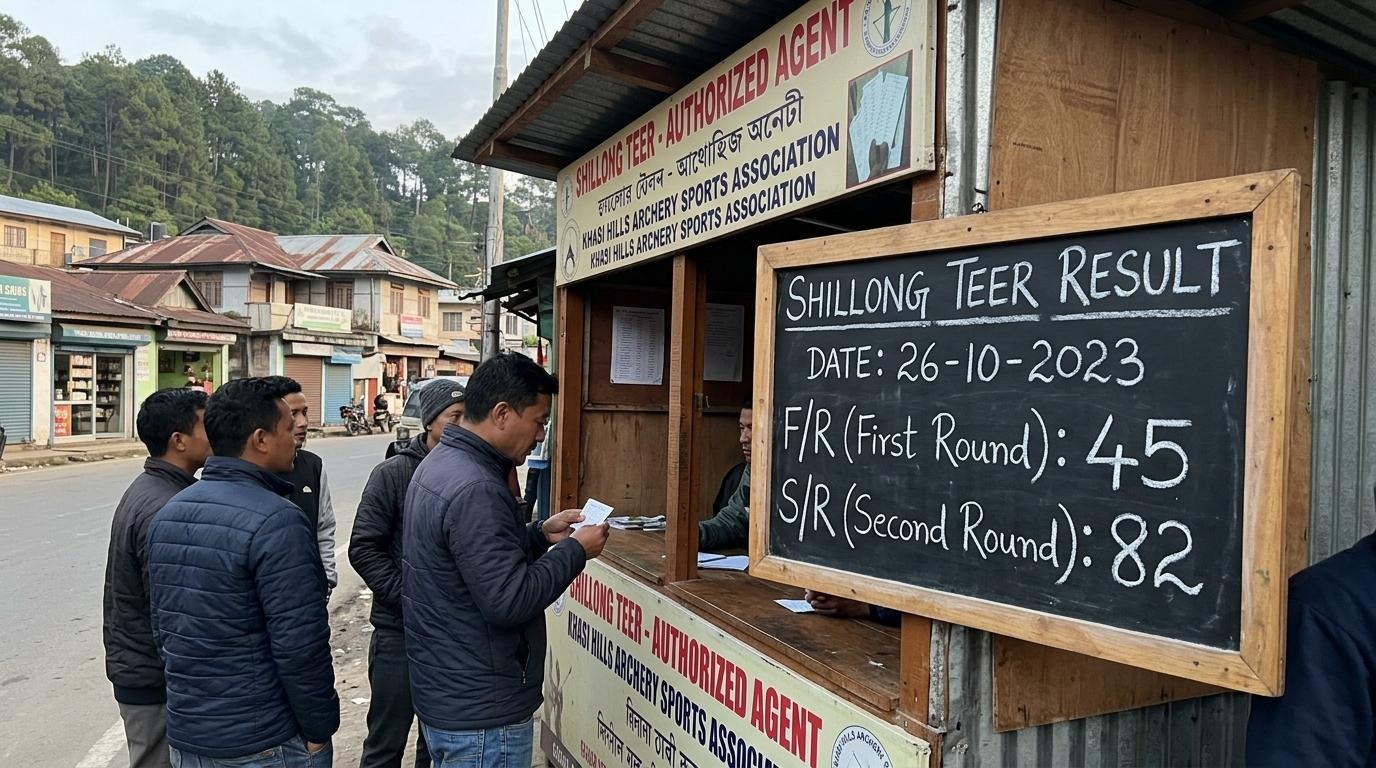
In the misty hills of Meghalaya, traditional sports and cultural customs often interweave to create unique regional experiences found nowhere else in the world. Among these, the game of Shillong Teer holds a distinctive place as a regulated archery-based lottery that draws thousands of participants and spectators every day. Governed under the Meghalaya Amusements and Betting Tax Act, this legal event blends indigenous Khasi archery traditions with numerical prediction.
For locals and regional enthusiasts across Northeast India, keeping track of daily updates is an integral part of the afternoon routine. Whether you are a long-time follower or a curious visitor exploring local traditions, checking a verified shillong teer result provides clear and instant access to the daily outcomes announced at the Polo Ground in Shillong.
The Cultural Heritage of Shillong Teer
Archery has been an intrinsic part of the Khasi tribe’s heritage for centuries. Historically utilized for hunting, village defense, and ceremonial gatherings, marksmanship is deeply revered in the Khasi hills as a symbol of community cohesion and physical skill. Over time, informal gatherings around local archery contests gradually evolved into an organized state event.
In 1982, the Meghalaya government formally legalized and regulated Teer betting. Today, the daily event is organized and overseen by the Khasi Hills Archery Sports Association (KHASA), which comprises 12 distinct local archery clubs. This regulatory framework preserves centuries-old indigenous sports traditions while generating state tax revenue and supporting local archers, ticket counters, and vendors.
Understanding the Daily Schedule and Structure
Shillong Teer takes place every afternoon from Monday to Saturday at the famous Polo Ground in Shillong. The event remains closed on Sundays and designated official state holidays.
The daily competition consists of two distinct rounds:
- First Round (3:45 PM – 4:00 PM): In the opening round, 50 professional archers take their positions in a semicircle, facing a cylindrical bamboo target placed roughly 50 yards away. Each archer fires 30 arrows within a strict time limit, resulting in up to 1,500 arrows directed at the target.
- Second Round (4:40 PM – 5:00 PM): In the second round, the field narrows to 30 archers. Each participant fires 20 arrows into the target frame, adding up to a potential maximum of 600 arrows.
The visual spectacle of dozens of archers swiftly firing wooden arrows into a woven bamboo target creates an atmosphere of suspense for community members and visitors watching from the stands.
How Winning Numbers Are Calculated
Unlike typical lotteries that rely on randomized digital algorithms or mechanical ball drawings, the winning numbers in Shillong Teer are derived from physical counts verified by officials and spectators.
Once each round concludes, officials gather around the target to pull out and count every arrow that successfully pierced the bamboo frame. The winning double-digit result is calculated using a straightforward mathematical rule.
Rule: The winning number corresponds to the last two digits of the total number of arrows hitting the target in that round.
Calculation Breakdown:
- If the total arrow count in the first round is 1,284, the official winning number for Round 1 is 84.
- If the total arrow count in the second round is 749, the official winning number for Round 2 is 49.
Participants choose numbers between 00 and 99 prior to the start of the draws. Predicting a single round correctly yields an 80-to-1 payout ratio, while successfully predicting both rounds in sequence—known as a forecast or single hit—can offer higher returns based on ticket values.
Dream Interpretations, Numbers, and Target Selection
A unique aspect of Shillong Teer is the cultural practice of connecting dreams with potential outcome numbers. Many local participants analyze their dreams from the previous night to select their numbers for the upcoming rounds.
| Common Dream Image | Traditional Associated Number Range |
|---|---|
| Man or Male Figure | 06, 16, 26 |
| Woman or Female Figure | 05, 15, 25 |
| Water, Rain, or River | 01, 08, 18, 28 |
| Money, Currency, or Coins | 00, 14, 24, 34 |
| Quarrel, Fight, or Argument | 03, 13, 37, 73 |
In addition to dream charts, experienced followers study historical result charts, previous day totals, and target formulas to observe patterns before placing their picks at licensed counters.
Regional Teer Games Across Meghalaya
The structured format of Shillong Teer has inspired similar state-regulated archery events across adjacent regions and neighboring districts:
- Khanapara Teer: Held near the Meghalaya-Assam border, Khanapara Teer follows a parallel schedule and format, serving audiences near Guwahati and surrounding districts.
- Juwai Teer: Originating in the Jaintia Hills region, Juwai Teer is conducted earlier in the day, giving participants multiple opportunities to follow regional archery results.
- Shillong Night Teer: Formatted for evening audiences, Night Teer caters to working professionals who prefer checking draw results after regular business hours.
Conclusion
Shillong Teer serves as an enduring bridge between centuries-old Khasi tribal customs and contemporary legal gaming in Northeast India. By transforming traditional marksmanship into a structured and transparent daily event, Meghalaya has preserved an irreplaceable element of its cultural fabric while supporting local sports institutions. Whether observing the skill of Khasi archers at Polo Ground or keeping up with daily trends, Shillong Teer remains one of the region’s most captivating cultural phenomena.